


The colours of rubies and emeralds are so striking that they define red and green tones – ruby red and emerald green. But have you ever ever wondered the way you get these colours?
I’m an inorganic chemist. Researchers work in my field to know the chemistry of all elements from which the period breeders consist of. Many inorganic chemist Concentrate on the transition metals – the weather in the midst of the periodic system. The Transition metals Most metals with which you might be conversant in, akin to iron (FE) and gold (Au).
A characteristic of connections with transition metals is its intense color. There are many examples in nature, including gemstones and color pigments. Even the colour of the blood comes from the Protein -hemoglobinthe iron incorporates.
The examination of the colours of connections that contain transition metals results in a very amazing science – this is a component of what made me study this field.
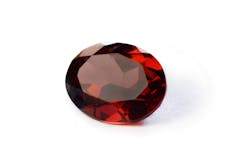
Ruby And Emeralds are great examples of how a small amount of a transition metal – on this case, chrome -Kann can create a pleasant color in a quite boring -looking mineral.
Minerals and crystals
Benedek/E+ via Getty Images
Are each rubies and emeralds Minerals, a form of rock with a consistent chemical composition and a highly ordered structure on the atomic level.
If this well -ordered structure extends in all three dimensions, the mineral becomes a crystal.
With A theory developed by physicists within the Nineteen Twenties Scientists can explain why rubies and emeralds have the colours they do. The crystal field theory predicts how the structure of a transition metal ions is influenced by the opposite surrounding atoms.
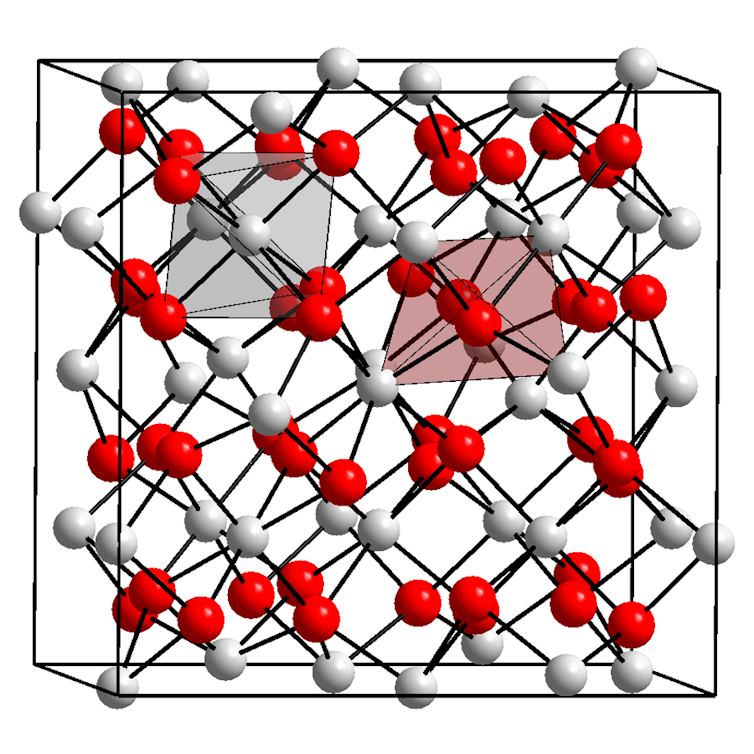
Rubins mainly consist of The Mineral Corundumwhich consists of the weather aluminum and oxygen in an everyday, repeating array. Every Aluminum ion is surrounded by six oxygen ions.
Ownership/Wikimedia CommonsPresent CC BY-SA
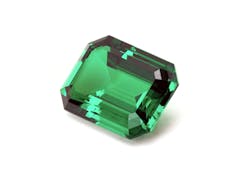
Smaragde mainly consist of The mineralberylwhat’s created from the weather beryllium, aluminum, silicon and oxygen. The crystal structure of beryll is more complicated than the corundum attributable to the extra elements within the formula, but each aluminum ions are surrounded by six oxygen ions.
Sunchan/E+ via Getty Images
Pure corundum and beryl are colorless. The good colours of rubies and emeralds come from the presence of very small amounts of chrome. The chrome replaces about 1% of the aluminum within the corundum or beryll crystal when a ruby or emerald forms underground at extreme temperature and pressure.
But how can a component – chrome – create the red color of a ruby and green color of a emerald?
Color science
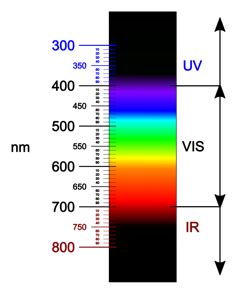
Rubine and emeralds have the colours they do because, like many substances, they absorb some light colours. The visible light consists of all colours of the rainbow like sunlight: red, orange, yellow, green, blue, indigo and violet. These colours form the Visible light spectrumWhich is simple to recollect as Roy G BIV.
Fulvio314/Wikimedia CommonsPresent CC BY-SA
.svg)
One of the foremost the reason why objects have a color is that they absorb a number of of those visible light colours. For example, if a substance absorbs red light, because of this the red light is enclosed within the substance and the opposite colours reflect in your eyes again. The color you see is the sum of the remaining light, which is positioned in the world from green to blue. When a substance absorbs blue, it looks red or orange for it.
In contrast to colorless aluminum ions, the chromions absorbs blue and green light once they are surrounded by the oxygen ions. The red light is reflected back, so you’ll be able to see in rubies.
In a emerald, although the chrome of six oxygen ions is surrounded, there may be a weaker interaction between the chrome and the encompassing oxygen ions. This is attributable to the presence of silicon and beryllium within the beryl crystal. They let the emerald absorb blue and red light so which you could see the green.
The ability to correct the properties of transition metals akin to chrome by changing the environment. It is a core strategy in my area of inorganic chemistry. This can assist scientists to know the fundamental science of metal -containing connections and the design of chemical compounds for certain purposes.
You can benefit from the amazing colours of the gemstones, but by chemistry it’s also possible to see how nature creates these colours with an infinite number of complex structures which can be made with the weather within the period plate.
image credit : theconversation.com