


Federal data sets began Disappear from a public perspective On January 31, 2025 in response to Executive Order of President Donald Trump. Among these were the centers for the control of diseases and prevention Youth risk behavior surveywhat the respondents asks about their gender identity and sexual orientation and pursues behaviors such as smoking and drug use; CDC HIV data set; and CDC and agency for poisonous substances and disease register Environmental equity indexpursued the pollution in communities and Social weakness indexidentified the communities with high risk of diseases and disabilities.
The collection of data on monitoring public health has never been politically neutral. It has always reflected ideas on individual rights. With our colleagues James Colgrove and Daniel WolfePresent We have written about The History and ethics of surveillance. Despite controversy, it remains the basic public health instrument.
Monitoring usually includes the persecution of people with diseases with names for the purpose of direct effect, including isolation, quarantine and treatment. It enables health officials to identify environmental threats and evaluate treatments. It enables governments to lead prevention and treatment resources in which they are most needed whether a region or a group with the highest risk is required. Up to the early 20th century, civil servants of the public health system argued that they worked without surveillance “In the darkness of ignorance“And” could just as well hunt birds by shooting into every green bush. “
Three important controversy in the history of public health underline what is at stake with the recording and maintenance of this information.
Tuberculosis – doctors oppose the share of names
The collection of tuberculosis data provided the basic blueprint for monitoring public health.
Debates about tuberculosis The reporting began in the late 19th century, when bacterial infection was not renamed the elite disease, but the urban arms. New York City was the first in the country to ask doctors to report the names of TB patients to remedy them Main cause of death Both in the city and in the USA
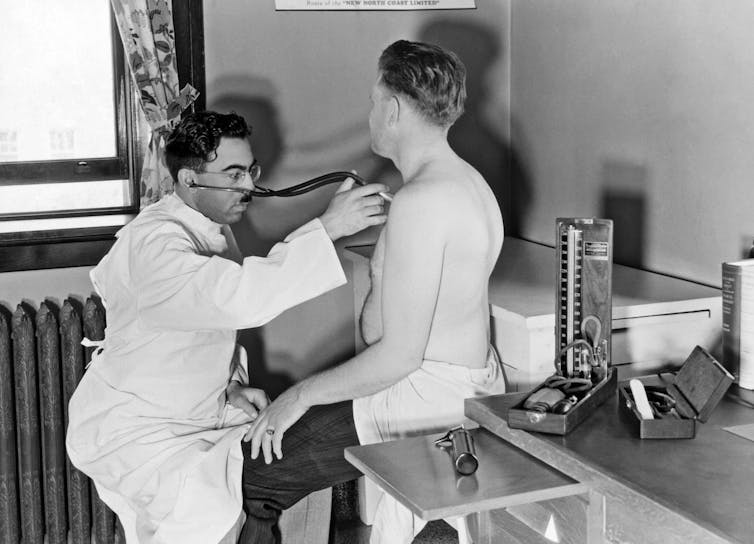
Smith Collection/Gado about Getty Images
The medical community opposed the monitoring of tuberculosis bitterly. A prominent New York surgeon argued that surveillance was “presenting” one “dictatorial … intervention”The health department that threatened to rob doctors of their patients.
But most people were not under the care of a private doctor, and the monitoring of tuberculosis was a way to ensure that the poor migration background living in the rent areas in the rent areas were isolated over clinics, food and, if necessary, if necessary. Despite the attempts by the doctors to kill these efforts, there was no public outcry to pursue “The Great White Pest” despite extensive, sensational reporting on controversy in the popular press.
HIV/AIDS – resistant patients at the top
Debates about TB monitoring, which developed in a time when both public health and medicine were very paternalistic and authoritarian: doctors of the health department or private Doctors made medical decisionsno patients.
This changed with the AIDS epidemic, the first major threat from infectious diseases in more than one generation. AIDS arrived When American politics took a sharp conservative turn with the election of President Ronald Reagan. When it was possible in 1985 to test for HIV, the virus that causes the AIDSThe view of a named surveillance triggered deep fears of stigma and discrimination.
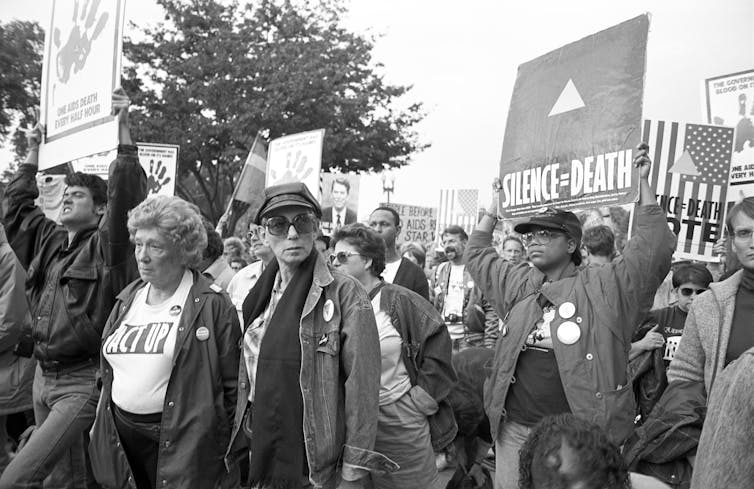
Catherine McGann via Getty Images
The view of reporting the names of those with HIV prompted a gay activist to explain. “First comes the national registerThen come to the Boxcars, then come the camps for people with AIDS. “The supporters of gay rights that prioritized privacy rejected the HIV monitoring as a threat.
An alliance of the beginners of gay rights and lawyers for bourgeois freedoms was initially able to prevent health departments from carrying out the HIV monitoring. But by the end of the 1980s there was growing pressure to return HIV/AIDS. “The medical mainstreamMeans that it could be treated therapeutically like other chronic diseases. When effective treatment was available in the nineties, the opposition and all 50 countries that needed named reporting faded.
Cancer patients require to be counted
When reporting about TB and HIV/AIDS began as a history of resistance, the story was very different when it came about Cancer reporting that has stayed behind Far behind the monitoring of infectious diseases.
According to the movements of the environment and women, citizen activists, mothers of children with birth defects and Women with breast cancer was alerted about the risk of cancer associated with pesticides or industrial pollutants. Women with cancer claimed one “Right to be counted. “” Although the National Cancer Act of 1971 Director of the National Cancer Institute to “Collect, analyze and spread All data that is useful in prevention, diagnosis and treatment of cancer ”, 10 countries still had no registers in the 1980s.
Vermonts Bernie Sanders, at that time an independent member of the US representative house, asked for a program financed by the federal government Collect data about cancer In every state. Talk to support his bill Sanders repeated in 1992 Called communities to know right: “We have to know the age of the people who come to cancer. We need to know where they live. We need to know the kind of work they do. We need your racist and ethnic background. “
https://www.youtube.com/watch?v=xitw1ukoxc4
President George HW Bush signed the Change of cancer registrationwho commissioned cancer monitoring in 1992 to the law. But it was it Only in 2000 that all states established cancer register.
Monitoring is fundamental to public health
Two important lessons have been created in the broader history of surveillance.
First, despite some battles, the communities viewed surveillance more often than their interests.
Second, the system of monitoring public health in the United States remains a underfunded patchwork. The Pew Environmental Health Commission Calling as birth defect “Unfortunately inadequate. “” In 1972 the US House Committee for state operations described the monitoring of occupational diseases as “70 years behind the surveillance and counting of infectious diseases”. In 2010 we observed ourselves that it was now “A century behind and counts. “”
The extent of the changes that the Trump management has planned for federal data systems and data records is unclear. By A Federal Court decisionThe most important monitoring systems and data records for public health are again online. But the landing pages for both Social weakness index and the Youth risk behavior survey Show a restriction in politics than in science that “all information on this page is extremely imprecise and separated from the unchangeable biological reality that there are two genders, male and female”.
Systems can be compromised if data records are scrubbed by important variables that enable public health measures with populations with the highest risk, or are or are removed from the public. Communities cannot affect what they cannot count.
image credit : theconversation.com