


Five years ago, on March 11, 2020, the World Health Organization explained the outbreak of Covid-19 A global pandemic. The new Coronavirus, Suns-Dim-started as the “cluster of severe pneumonia cases with unknown causes”, which was reported in Wuhan, China, in December 2019. It had reported 118,000 cases in 114 countries by March 11.
Dr. Tedros Adhanom Ghebreyesus, who at the time was General Director in a media meeting that day said that “the WHO is deeply concerned with both the alarming spread and severe level levels as well as through the alarming inactivity”. He asked the leaders to move quickly Scale your emergency answersAnd say that “all countries can still change the course of this pandemic.”
Public health authorities such as the WHO and the US centers for the control and prevention of diseases played with critical roles during the entire pandemic during coordination Local health departments After recognizing, chasing and testing for the virus. The WHO and CDC websites Get unprecedented traffic Since they became invaluable sources for the latest resources for prevention, number of cases, hospital stays and deaths. The National health institutes was instrumental in the development of COVID-19 treatments and contributions to vaccine research.
Now, five years later The USA withdraw from the WHO.
At the same time, the United States with outbreaks of tuberculosis, a Resuscitation of measles Among non -vaccinated communities and the worst flu period in 15 years.
Much of the WHO work, the CDC and other public health authorities take place behind the scenes, which only occasionally attract the public attention. In order to put these roles in the right perspective, it can be helpful to examine public health before these uniform units existed.
https://www.youtube.com/watch?v=KZXEXCWYFGU
A spreading epidemic, slow communication
As the author of the book 2020 “”Construction of the outbreak: epidemics in the media and collective memory” And “Cover Covid: Media and Pandemic in the digital age“, Published in 2025, I examined in detail How the public health crises have developed. And through my research as a scientist for health communication, I analyzed the essential role of non -profit organizations and public authorities in protecting public health.
Both WHO and the CDC were set up in the 1940s. Before an international or even national network of public health authorities existed, there were no coordinated means of communication, external studies or formalized species to record data in geographical areas. Without a means of exchanging information, it was much more difficult for outbreaks and epidemics to be connected between the regions.
A remarkable example was the influenza pandemic from 1918, a fatal combination of influenza and pneumonia, which first appeared A basis of the Kansas Army in the spring of 1918. From there, the epidemic moved to overseas and spread until late summer throughout Asia and Europe. When it returned to the United States in August, the disease was displaced by the “Spanish flu”. The lack of media reporting on the outbreak of spring, coupled with the lack of illness tracking, meant that most people believed that the fatal tribes had started in Europe.
Nobody officially followed these outbursts until the disease returned with American troops in August 1918. In September, the US surgeon and the US public health service tried to do so Measure the size and gearbox from influenza by sending telegrams to state health officers.
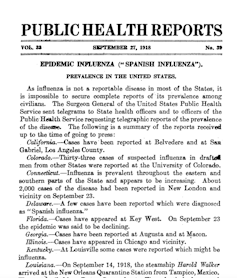
Reports on public health
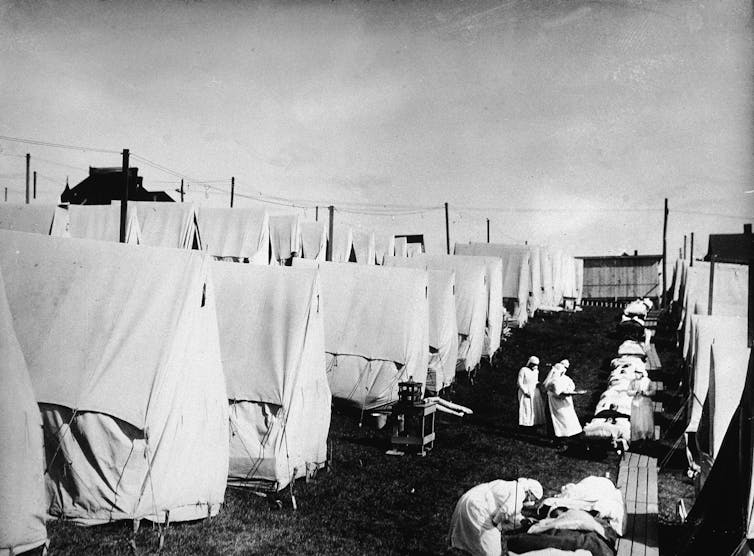
At this point it was far too late for mass preparation. The few stories of the spring outbreaks had been buried in a flood of competing news about the World War. Therefore, people knew almost nothing about the angry illness until she infected her own city. Briefly to resources and caregivers, the municipalities had to create provisional hospitals and find healthy residents who care for the sick.
For example at the University of Kansas during influenza pandemic, professors of female professors Well -kept for sick students, faculties and employeesWashed bed linen and prepared food. Since agencies such as the WHO and CDC have not yet existed and the world war further hindered communication, only a few information in geographical regions was documented and shared, e.g.
The influenza pandemic quickly faded into the Collective memory of the publicPartly due to the lack of personal stories and follow-up stories, after cases were decreased-at least to Covid-19, a new public interest in the 100-year crisis aroused.
Hulton archive on Getty Images
The polio epidemic saw a more coordinated reaction
From the 1930s, public health reactions to polio outbreaks showed the advantages of nationally coordinated efforts. The National Foundation for Infantile paralysis helped combat polio through fundraising, carried out campaigns to educate the public, to support scientific research and to help sacrifices from the acute hospital stage through rehabilitation. These efforts were particularly evident in the 1952 Polio epidemic.
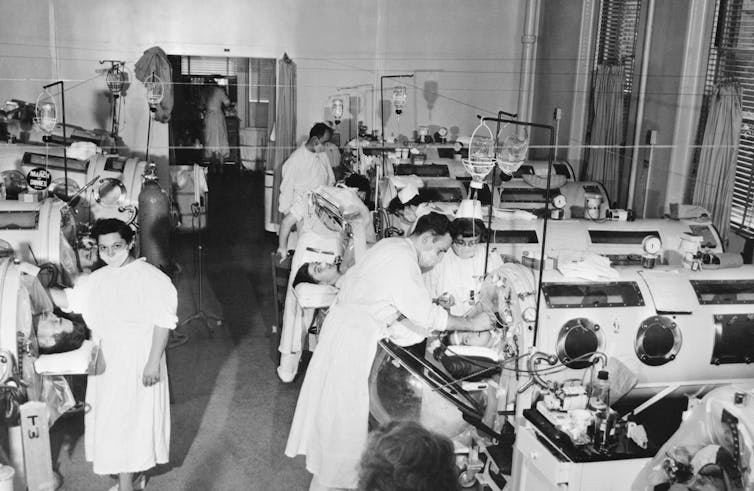
In the summer of 1952 escalated US policy cases, Finally a total of 57,628 -More than a third of it included different levels of paralysis. The National Foundation for Infantile paralysis coordinated with local chapters of their organization throughout the epidemic. Together, the foundation held people over the growing epidemic, created polio -oriented hospital wings, recruited nurses and other members of the health professions and joint resources for the areas with outbreaks.
The widespread vaccination efforts led to a profound reduction in polio falls in the United States in the 1960s, which caused the National Foundation for Infantile paralysis Change his name and mission to the March of Dimes. The organization served as a model for non -profit organizations and public health authorities for communication and coordination between local and national companies.
Bettmann about Getty Images
The critical role of public health authorities
The CDC was opened in 1946 Representatives from 53 countries the constitution of the WHO. This global unit brought together countries through continents to combat monitoring, prevention, treatment and research by the disease.
When these agencies were extended into new areas of public health in the 1950s and 1960s, they reflected many of the approaches and strategies used by the National Foundation for Infantile paralysis: Persecution and recording of data publicly, to raise the public, to examine threats, to help in moments of crises and support scientific research. Together, the CDC and WHO have significantly improved public health from the Global extermination of smallpox and the decline of those in the vaccine dancing to the development and Implementation of HIV/AIDS treatments.
Before the Covid 19 pandemic, the roles of these agencies often did not attract much attention, since field agents traveled to examine something as routinely as Salmonella or as scary as hemorrhagic fever cases.
John Moore about Getty Images
While Public opinions of the CDC and the Who were moving through the Covid 19 pandemicThe latest survey results show that the majority of Americans Trust of public health authorities At least to a certain extent. A survey of 2024 showed that almost 60% of American adults believe that the United States benefited from his WHO membership.
When infectious diseases come out of the spotlight and are considered less urgent, the critical roles of these public health authorities fade into the distant collective memory, similar to the pandemics of 1918 and Covid-19. People forget early enough the need for ongoing scientific research, educational programs and teams that can quickly react to local, national and international level.
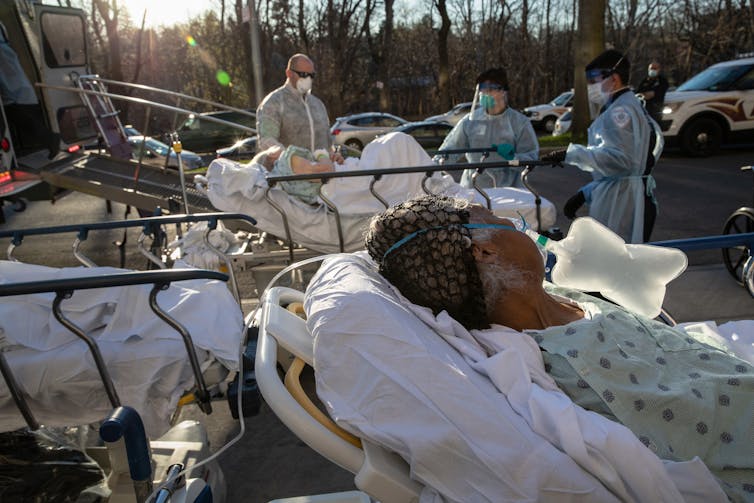
The disease is still a threat because the outbreaks of measles, tuberculosis, influenza and other pathogens remind us. People are still sick or die of Covid-19: from March 1st, 6,725 people had died from Covid-19 in the USA especially in 2025 and almost 7.1 million died worldwide since January 2020.
Without strong, coordinated efforts between public health authorities, even small disasters can escalate in adult epidemics or even pandemics, for which the world will be far less prepared.
image credit : theconversation.com