


“Violence is barely a part of the job. Every nurse and medical examiner will experience it sooner or later. “
Feelings like this suffer within the American hospitals and health facilities that grasp a worrying and growing reality. Although the Americans consider nursing as The most trustworthy occupationWe often don't see that it is usually one of the crucial dangerous.
An alarming one 8 out of 10 nurses are exposed to violence at work. As a result, the employees within the healthcare system are greater than 4 times as more likely to be injured by violence on the workplace together as a employee in all other industries.
Despite these amazing numbers, the total extent of this epidemic is probably not fully understood, since nurses and other encounters within the healthcare sector are chronically mixed. The American Nurses Association estimates that Only 20% to 60% of the incidents are taken into consideration. In addition, there isn’t any agreed definition of violence on the workplace or a transparent option to pursue it on the national level.
As a practicing nurse on the bed, I experienced my share of violence within the workplace. As a Professor of nursingMy investigations show that violence has turn out to be a normalized but not reported a part of the work within the healthcare system and that it influences the nursing patients that receive patients in an omnipresent way.
What is de facto considered violence on the healthcare workplace?
When people take into consideration violence at work, they often imagine dramatic physical attacks. Abuses occur, but violence which are geared toward employees can tackle many other forms, including verbal threats, intimidation, sexual aggression and bullying.
What makes the definition and measurement of violence at work within the healthcare system particularly difficult is the offer of those involved. Violence will be attributed to patients, their families, employees, and even angered public members.
Nurses and health staff work with people in incredibly stressful moments of their lives. Sometimes patients have diseases that may cause them to act or confuse, akin to dementia, delirium, psychosis and even postoperative reactions to anesthesia.
https://www.youtube.com/watch?v=vVep5fj0rp0
Some health organizations use vague definitions akin to “Violence at the workplace is a violent act or threat of violence”, while nursing organizations apply for a lawyer for the organizations for the organization for violence. graded definitions that differentiate between the perpetrator and intention.
Although not all employees can recite the official definition of their organization of violence at work, ask a nurse whether you will have ever experienced a threatening situation at work and you will likely have stories ready. In my 14 -year nursing practice, the nurses shared many differing types of impending encounters. They reported that they shouted on by disturbed visitors and packed their hair and wrists of patients who attempt to bite or spit them. I even have personally experienced that objects from all around the room were thrown on me and were threatened with retaliation by the relations of the patients.
Nurses also shared more extreme experiences by which they or their employees were injured in the midst of attempting to simply care. Many described the emotional effects of observing a colleague who was seriously injured to require medical help.
From my observations, it isn’t only an important incidents, but additionally the countless small threats or insensitive behaviors that add up the profession of a nurse. These apparently less threatening events are way more difficult to document, and lots of nurses twitch to their shoulders, however the small violations demand tribute in the event that they occur repeatedly.
The culture of silence break
A culture of silence makes such incidents difficult to pursue.
The medical-surgical nursing department of the hospital by which I carried out my research has a healthy and supportive culture. In my ongoing doctoral thesis, which might be published in May, only 30% of the 74% percent of employees who were recognized by force at work last yr reported the event.
If nurses are silent, be it out of fear, senselessness or institutional pressure, violence becomes a recognized a part of the job. Without precise data, health facilities Do not understand the true extent of the issuecannot perform and fight effective security measures to support their employees in a smart way.
There are common topics why nurses examine violence. Some nurses think The reporting makes no difference. Others find the shortage of clarity in Defining violence on the workplace or guidelines demotivating and confusing.
Nurses also report a Lack of support from management, fear of reprisals Or a sense of shame in reporting. As a rule, many nurses simply find reporting instruments which are too difficult and time -consuming to make use of them.
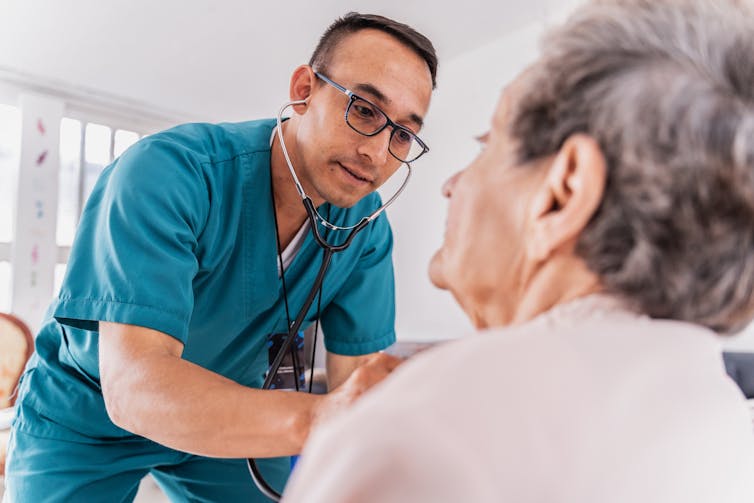
Frazao Studio Latino about Getty Images
The hidden costs for health care
For the healthcare staff, the implications go far beyond bodily harm.
Violence on the workplace in all its forms contributes to this Fear, depression or PTBSin addition to Job -free satisfaction. Dangerous violence trends within the workplace contribute to this 55% of the healthcare staff feel burned out and 18% of the newly licensed nurses leave the job throughout the first yr.
This is a giant problem once you consider that the United States should probably have 193,100 openings for nursing jobs a yr until 2032will only produce about 177,400 recent nurses during this era. This also has a significant impact on patient care.
During my profession as nursing, I observed that my colleagues developed complex strategies to guard themselves and at the identical time try to make sure compassionate care. Like me, they tended to rigorously position themselves near the doors, to maintain a continuing awareness of their surroundings, and in silence each recent interaction evaluated to potential risks.
These invisible precautions reflect the far -reaching effects of violence in healthcare. If nurses are hypervigic by way of security, they’ve less emotional energy for patient care. If you rush between the rooms due to short personnel staff Violence -related salesYou have less time for each patient. If you’re anxious about what the subsequent encounter with patients brings, increase your fear, fear and stress as an alternative of specializing in high -quality care.
Create the secure health care together
Every visit to the healthcare system is a chance for patients and their families to enhance take care of everyone.
When you visit a hospital or a clinic, try to know the stress under which the health care staff are subject to and express your needs and concerns. You never know what your nurse has to do with other patients in your interactions. They attempt to divide the total attention to them, but they might also experience a difficult and traumatic situation right round the corner.
It also helps to exchange information that’s relevant for the care of your member of the family, e.g. And it’s best to approach for those who experience any types of aggressive behavior. These measures may appear small, but they support the staff of the healthcare system and help prevent violence in healthcare.
Nurses are trained to maintain information privately, to be an issue solver and to hold the load of the workplace in order that they don’t all the time seek support. If you will have a nurse in your loved ones or circle of friends, let her know that you’re going to maintain it. The support of your security confirms your work and leads to raised support for everybody.
image credit : theconversation.com