


Your genes play a very important role When determining your size, your hair and eye color and your skin tone, you don't tell the entire story who you’re. Your surroundings are incredibly vital to shape your personality, your preferences and dislikes and your health. In fact, their eating regimen, social interactions, exposure to dirt, physical activity and education are common Exceed the influence of genetics on lots of the functions they define.
If you learn how your genes and the environment increase your probability of developing asthma, heart disease, cancer, dementia and other diseases, life -changing consequences can have. The area of genomics has made it relatively easy to check quite a lot of genetic variations in reference to the chance of illness each within the hospital and at home.
And lately, science has progress within the detection of the Environmental This risk for several diseases and the determination of possibilities for optimizing treatments based in your personal environmental pollution.

Willie B. Thomas/DigitalVision via Getty Images
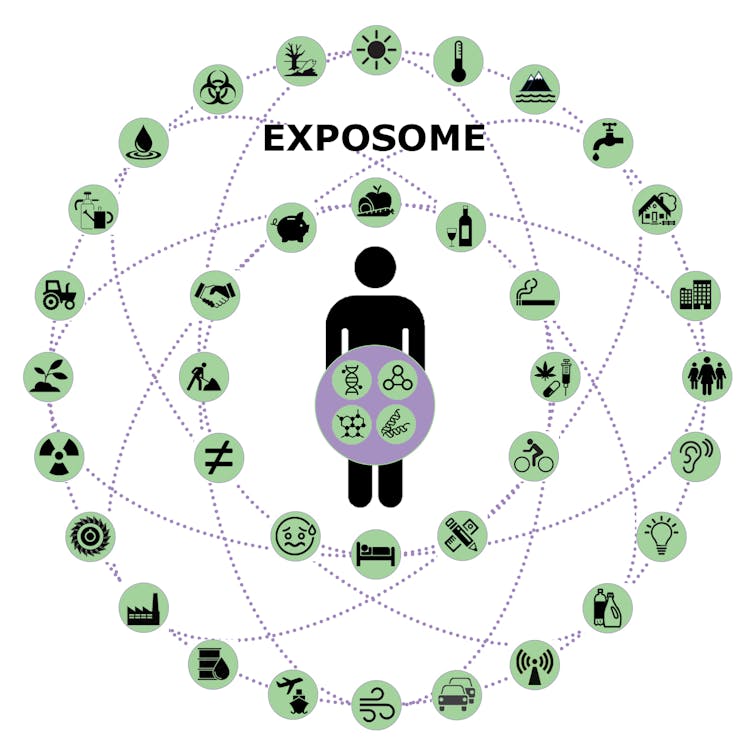
My work as Pharmacologist and toxicologist led me to the creation Exposomics science – The examination of all physical, chemical, biological and social aspects that influence their biology. While your genome includes all of the genes that encode your biology, your exposome is an idea that features all of your environmental pollution. As the best way researchers use DNA sequencer to look at genomics, scientists use chemistry and high-tech sensors in exposomics to measure the results of hundreds of environmental aspects on health.
Medicines don't all the time work
For many individuals, standard drug therapies simply don’t work to treat certain diseases. control Blood pressure often requires months of attempt and error. It can take months and even years to find out an appropriate treatment plan For depression.
Unwanted events attributable to medication More than 1 million Visits to emergency rooms yearly within the USA What drives these differences within the drug effects between patients? Is it your genes? Don't you’re taking your medication, as prescribed on the premise of unintended effects? Or something else?
As it seems, your environment can have a significant impact on how well certain treatments give you the results you want. Think of the warning signs that advise you, for instance, not drink grapefruit juice while taking a certain medication. This is because a natural chemical in grapefruit inhibits the enzymes that reduce these medication. Some common statins for checking high levels of cholesterol can construct on toxic values, for the reason that chemical in grapefruit juice blocks its normal processing.
Grapefruit shouldn’t be the one environmental factor that influences the best way they react to their medication. Over 8,600 chemicals are utilized in the USA within the United States they usually are exposed to hundreds of those chemicals every single day. It is more likely than not that lots of these chemicals can interact with the medication they take.
Nathalie Ruaux/Wikimedia CommonsPresent CC BY-SA

Some of the chemicals we use to maintain fleas and ticks from pets can actually Increase the values The same enzyme blocked by grapefruit juice, which implies that a statin might be broken down so quickly that it doesn’t control the increased cholesterol level.
Products from combustion The drug -metabolizing enzymes also can affect organic substance resembling motor exhaust gas and burning wood. Some of those chemicals, called Polyaromatic hydrocarbonscan inactivate medication for the treatment of asthma. The environmental factor that triggers your asthma can prevent the medication from working to treat work.
A chemical solution?
Researchers help to seek out advances in chemistry to seek out out which chemicals are in the best way of treatment.
Your hospital laboratory can already measure dozens of molecules in your blood. Measuring their salt levels can tell the doctors how their kidneys work, levels of cholesterol indicate their risk of heart diseases, and certain enzymes show the health of their liver. These common tests are routinely and useful for nearly every patient.
There are many additional tests that might be used to find out how a certain disease reacts progress or therapy. The hemoglobin -a1c levels determine how well the glucose levels in patients with prediabetes or diabetes are checked. And hundreds of other human diseases have their very own Corresponding biomarker.
In research laboratories, scientists can recognize the existence of hundreds of molecules at the identical time with instruments Mass spectrometer. Every chemical in a single sample has a novel mass, and these devices measure these masses in order that scientists can categorize. For this reason, scientists can discover all pesticides, plasticizers, plastics, pollution and other chemicals in a certain sample. You also can measure your individual internal biology, e.g. B. the connections involved within the processing of the food they eat and the hormones that behave.

Philipp Sulzer/Wikimedia Commons

In addition, mass spectrometers can Measure lively ingredient metabolites. If you’re taking a drugs, it is often broken all the way down to several different compounds or metabolized. Some of those compounds contribute to the effect of the drug, others are inactive. The evaluation of which metabolites can be found in your body provides information on process medication and whether the medication that you just take interact.
If you summarize all of those aspects, scientists can examine how their environment can affect the effectiveness of their medication.
A greater recipe – for you
Together with dozens of scientists in lots of institutions, my colleagues and I develop methods to measure all chemicals of their bodies. The project, called indipharm – briefly, for individualized pharmacology – tools designed to measure a wide selection of medicines, drug metabolites and environmental chemicals at the identical time.
By combining environmental data with genetic information, we hope to enhance how medicinal products work in humans by checking out whether chemicals of their environment or nutrition change the processing of a certain medication. This includes whether the drugs administered are on therapeutic values, how the medication and chemicals interact with one another, and determine whether other variable -intended drug effects influence. This could cause the quantity of prescribed medicines to alter, switch to a different drug and even redesign the medication itself.
Our team begins with the identification of the biological and biological aspects which might be assembled with metabolic diseases, including obesity and diabetes, along with frequent diseases resembling hypertension, high cholesterol and depression. For example, there may be significant differences How well people react to anti-adiposity or anti-diabetes medication, and we hope to seek out out why this may profit from tailor-made treatment.
Bringing the best medication at the best time at the best time requires a greater understanding of the environmental aspects that influence their functioning. We imagine a future through which a physician can use your genetic and environmental history to seek out one of the best drug treatment that may give you the results you want right from the beginning, which reduces the necessity for attempt and error.
image credit : theconversation.com